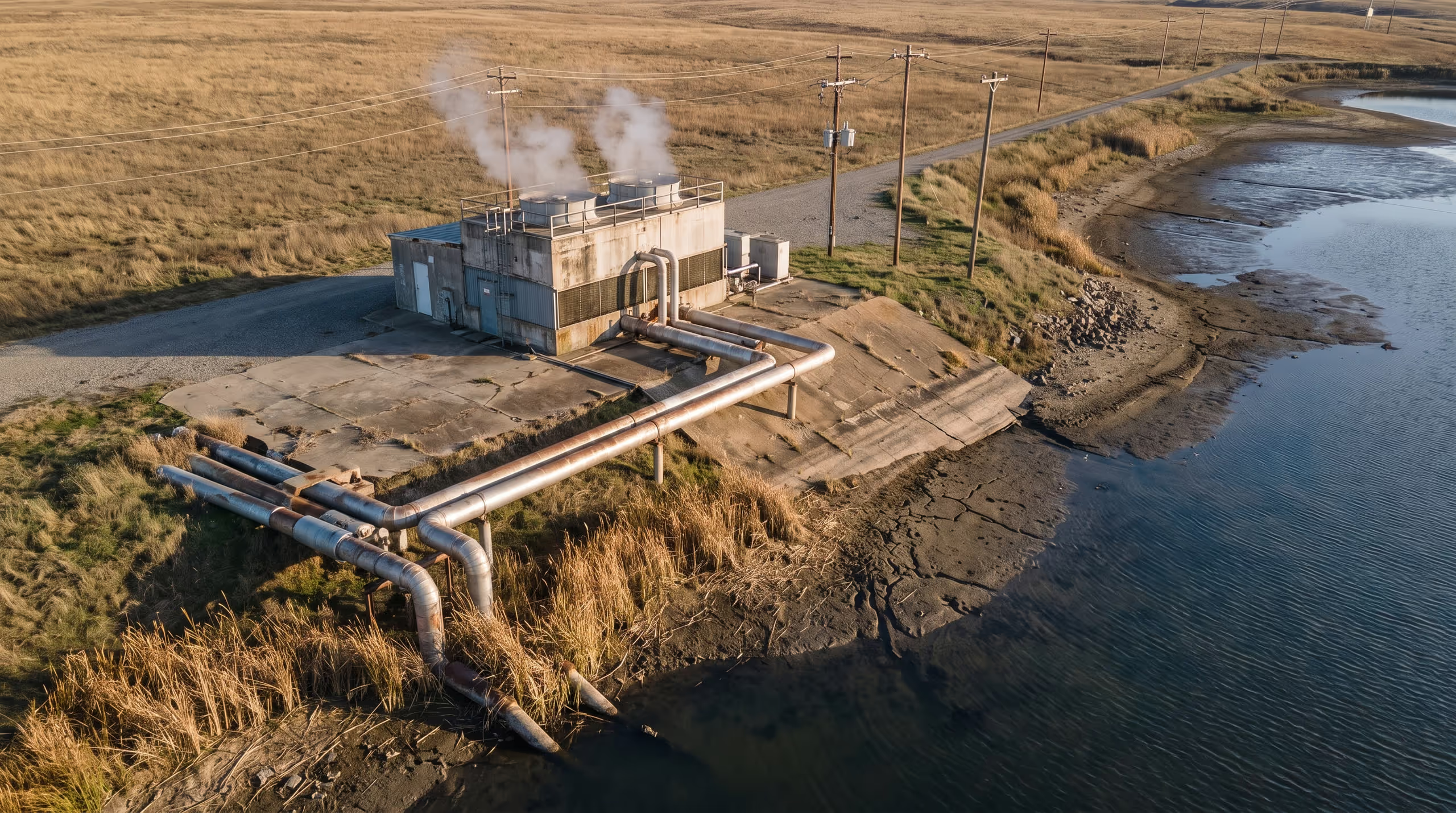
Computation happens somewhere. It uses hardware made from materials, draws power while operating, rejects heat, and depends on people who build, maintain and eventually dispose of it. Some stored information persists without power; that does not make its manufacture or use immaterial.
The spiritual error is not using a device. It is allowing the word cloud to remove the place and the people from an account of what we are doing.
Questions small enough to answer
For a significant workload or purchase, ask:
- Where will it run, and what supplies the electricity?
- How is it cooled? Does it withdraw or consume water, and from which source?
- What hardware must be made or replaced? Could existing equipment do the job?
- Who lives near the facility, and what can they contest?
- What work is required for data preparation, maintenance and disposal?
- What is the real alternative, including the cost of doing nothing?
These answers may be incomplete. Keep the gaps attached to the claim rather than replacing them with an impressive average from another setting.
A more efficient operation need not reduce total demand if the number of operations grows faster. Equally, a computational service can replace a more costly activity. The comparison needs its boundaries stated in both directions.
Cost does not decide purpose
Medicine, surveillance and music can use similar machines. Their costs do not make their purposes equivalent. Nor must every use prove that it saves a life: beauty and play matter. Their value does not entitle a distant user to ignore another community’s water or working conditions.
Use the smallest adequate method when you can. Keep equipment useful where repair is reasonable. Question habitual regeneration. These acts do not discharge the larger obligations of institutions deciding how infrastructure is built and governed.